A lot of Oregon Coast businesses still treat their Facebook page like their main website. It makes sense on the surface. You’re already on there. Customers can message you. You can post specials and photos. And it’s free.
Until it isn’t.
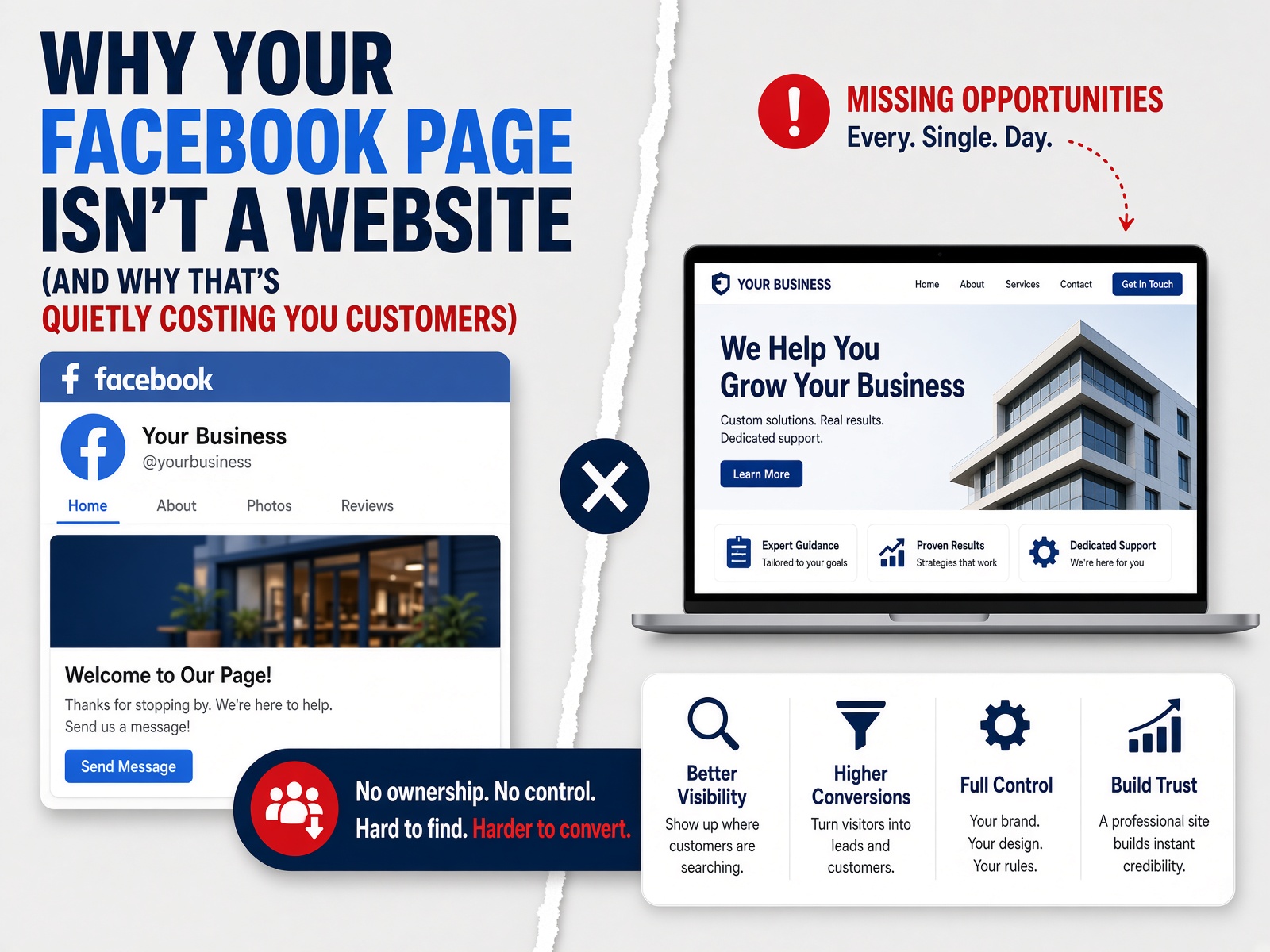
Facebook is rented space. You don’t own it. You don’t control the rules. And when the algorithm decides your posts only reach 8% of the people who follow you, there’s not much you can do about it. Tourists searching “best fish and chips near Depoe Bay” or “pet-friendly motel Newport” are not scrolling Facebook first. They’re on Google. If your only digital presence is a Facebook page, you’re invisible to a big chunk of the people who would actually walk through your door.
A real website is different. You own the domain. You own the files. You decide how it looks, what it says, and how fast it loads on a phone. It shows up in search results. It works even when Facebook is having a bad day. And it looks like a real business instead of someone’s personal profile with a cover photo.
Here’s what we see all the time: a solid local business with great reviews and loyal customers, but their online presence is a Facebook page that hasn’t been updated in three months and a Google listing that points nowhere useful. Meanwhile the place down the street with a clean, fast, mobile-friendly site is getting the phone calls and the bookings.
Owning your site also means you can do the practical stuff that actually helps. Online menus that don’t require a Facebook login. Booking forms. Clear contact information. Hours that stay accurate. Photos that load quickly on a phone while someone is standing outside deciding whether to come in. None of that works as well when you’re stuck inside someone else’s platform.
You don’t need a fancy 20-page site. Most of the businesses we work with do just fine with a straightforward six-page site: home, about, services or menu, gallery, contact, and maybe one more page that fits. Built mobile-first, set up properly for Google, and hosted somewhere that actually answers the phone when something goes wrong.
If you’re still running everything through Facebook because it felt easier, you’re not alone. A lot of good businesses on the coast started that way. But the ones that keep growing usually make the jump to something they actually own.
If you want to talk about what a clean, simple site would look like for your place, just reach out. No sales pitch, no long contracts. We’ll tell you straight whether it makes sense.